India's IT Outsourcing Industry Faces Pressure from AI Substitution

Apr 6, 2025 By George Bailey

The Indian IT outsourcing industry, long considered the backbone of the country's service sector, is facing an existential challenge from the rapid advancement of artificial intelligence. For decades, India has been the global hub for back-office operations, software development, and customer support, leveraging its vast pool of English-speaking engineers and cost advantages. However, the rise of AI-powered automation tools is threatening to disrupt this carefully constructed ecosystem, forcing companies to rethink their business models and workforce strategies.


The scale of the disruption is becoming increasingly apparent. Major global corporations that once relied on Indian IT firms for routine coding, data processing, and technical support are now experimenting with AI solutions that can perform these tasks faster and at a fraction of the cost. Generative AI platforms can now write basic code, debug programs, and even handle complex customer queries without human intervention. This technological leap comes at a time when the Indian IT sector was already grappling with slowing growth and margin pressures.


Industry veterans recall how Indian companies successfully navigated previous technological shifts, from mainframe to client-server architectures and later to cloud computing. But the AI challenge appears fundamentally different in both speed and scope. Unlike earlier transitions that created new service opportunities, AI threatens to eliminate entire categories of work that formed the bread-and-butter for many mid-tier Indian IT firms. The automation of repetitive coding tasks alone could impact nearly 30% of the work currently outsourced to India, according to some estimates.


The human cost of this transformation is beginning to surface. Hiring freezes have become common across the sector, with many companies quietly reducing their campus recruitment numbers. Entry-level programming jobs, traditionally the first rung on the IT career ladder for thousands of Indian engineering graduates each year, are particularly vulnerable. There's growing anxiety among mid-career professionals too, especially those specializing in areas like application maintenance and legacy system support where AI tools are making rapid inroads.


Some forward-looking Indian IT firms are attempting to pivot rather than resist the change. Several major players have announced substantial investments in AI training programs for their employees, aiming to transition them from routine tasks to more complex, higher-value work. The strategy appears sound in theory - as basic functions get automated, the demand for professionals who can manage AI systems, ensure quality control, and handle exceptions should increase. However, the scale of reskilling required is enormous, and success is far from guaranteed.


The geographical implications of this shift are equally significant. India's IT boom created thriving urban ecosystems in cities like Bangalore, Hyderabad, and Pune, complete with modern infrastructure and cosmopolitan cultures. A sustained reduction in outsourcing volumes could impact these urban economies significantly, from real estate markets to local consumer spending. Some analysts worry about a potential "domino effect" where reduced IT employment leads to weaker demand across multiple supporting industries.


Interestingly, not all segments of the Indian IT sector face equal exposure to AI disruption. Niche areas requiring deep domain expertise, complex system integration, or sensitive data handling may prove more resilient. Similarly, consulting services that combine technology implementation with business process redesign continue to show strong demand. The challenge for Indian firms lies in moving more of their workforce and revenue mix toward these protected areas fast enough to offset declines in traditional service lines.


Government and educational institutions are starting to respond to the challenge. Several state governments have initiated partnerships with private firms to create AI-focused training institutes. Engineering curricula are being revised to include more data science and machine learning components. However, critics argue that these measures may be too little, too late for many current IT workers whose skills are becoming obsolete. The need of the hour, they suggest, is massive short-term upskilling initiatives combined with social safety nets for those who cannot make the transition.


The coming years will test the adaptability of what has been one of India's most successful industries. While complete replacement by AI seems unlikely in the near term, the golden era of linear growth based on labor arbitrage appears to be ending. Indian IT firms must now demonstrate whether they can reinvent themselves as leaders in the AI era rather than victims of it. Their success or failure will have ramifications far beyond corporate balance sheets, potentially reshaping India's economic trajectory and its position in the global technology landscape.

Recommend Posts
Business

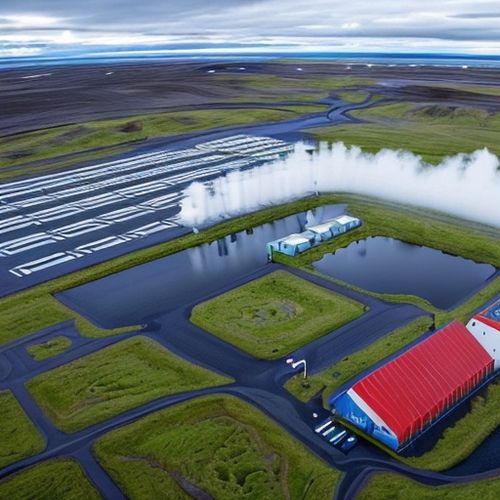
Iceland's Geothermal Energy Export Data Center Plan

By John Smith/Apr 6, 2025

Iceland's ambitious plan to position itself as a global hub for sustainable data centers is gaining momentum, with government and industry leaders unveiling a comprehensive strategy to export the country's unique combination of geothermal energy and computing infrastructure. The small Nordic island nation, already home to several major data centers, is now looking to package its renewable energy expertise as an export commodity.
Business

Bangladesh Garment Industry Order Shift Phenomenon"

By David Anderson/Apr 6, 2025

The global garment industry is witnessing a significant shift in sourcing patterns, with Bangladesh emerging as a primary beneficiary of order redistribution. As geopolitical tensions, trade policies, and cost considerations reshape supply chains, international brands are increasingly turning to Dhaka to fulfill their apparel needs. This trend reflects both Bangladesh's growing competitiveness and the complex recalibration of global manufacturing networks.
Business

South Africa's Power Crisis Spurs Enterprises to Build Their Own Solar Photovoltaic Systems

By David Anderson/Apr 6, 2025

The ongoing electricity crisis in South Africa has reached a critical point, forcing businesses to seek alternative energy solutions. With rolling blackouts becoming the norm and Eskom, the state-owned power utility, struggling to keep the lights on, companies across various sectors are turning to self-built photovoltaic (PV) systems to ensure operational continuity. This shift marks a significant transformation in the country’s energy landscape, as businesses take matters into their own hands to mitigate the impact of unreliable grid power.
Business

Reassessment of Kazakhstan's Central Asian Hub Status

By Emma Thompson/Apr 6, 2025

In recent years, Kazakhstan has emerged as a pivotal player in the geopolitical and economic landscape of Central Asia. Its strategic location, bridging Europe and Asia, has long been recognized, but the shifting dynamics of global trade, energy security, and regional stability have prompted a fresh reassessment of its role. As the world grapples with supply chain disruptions and the need for diversified routes, Kazakhstan’s potential as a continental hub is being re-evaluated with renewed interest.
Business

Transition Period for Adjustment of Tax Policies for Irish Multinational Corporations

By Emily Johnson/Apr 6, 2025

The global tax landscape has undergone significant changes in recent years, with Ireland's corporate tax policies coming under particular scrutiny. As one of Europe's most attractive destinations for multinational corporations, Ireland's tax regime has long been a cornerstone of its economic strategy. However, recent international pressure and evolving global tax norms have compelled the Irish government to reconsider its approach, leading to a carefully managed transition period that aims to balance competitiveness with compliance.
Business

The Impact Mechanism of Peruvian Copper Mine Strikes on Global Copper Prices

By Sarah Davis/Apr 6, 2025

The global copper market operates as an intricate web of interconnected factors, where disruptions in one key producing region can send ripples across continents. Peru, as the world's second-largest copper producer after Chile, plays a pivotal role in this delicate balance. When labor strikes hit Peruvian mines, the effects extend far beyond the Andes mountains, influencing everything from London Metal Exchange prices to manufacturing costs in China.
Business

Analysis of the Reasons for the Subpar Recovery of Thailand's Tourism Industry

By Thomas Roberts/Apr 6, 2025

Thailand's tourism industry, once a powerhouse of Southeast Asia, continues to face an uneven recovery despite the world reopening post-pandemic. The anticipated surge in international visitors has fallen short of projections, leaving hotels, tour operators, and street vendors grappling with unexpected challenges. While the Thai government initially predicted a swift rebound, a combination of shifting global travel patterns, economic pressures, and internal bottlenecks have created a perfect storm that even the Land of Smiles struggles to weather.
Business

The Impact of Nigerian Currency Devaluation on Multinational Corporations

By Olivia Reed/Apr 6, 2025

The recent sharp depreciation of the Nigerian naira has sent ripples through the business landscape, particularly for multinational corporations operating in Africa’s largest economy. For years, Nigeria’s currency woes have been a persistent challenge, but the latest devaluation—triggered by a combination of falling oil revenues, inflation, and foreign exchange shortages—has forced foreign investors to rethink their strategies. The implications are far-reaching, affecting everything from supply chain costs to praofit repatriation, and even long-term investment decisions.
Business

Poland's Labor Challenges in Embracing the Transfer of German Manufacturing

By Jessica Lee/Apr 6, 2025

Poland has emerged as a key destination for German manufacturing companies seeking to relocate operations, driven by lower labor costs, geographic proximity, and a skilled workforce. However, this shift is not without its challenges, particularly concerning labor availability and workforce readiness. As German firms increasingly set up production facilities in Poland, the strain on the local labor market has become evident, raising questions about sustainability and long-term growth.
Business

Vietnam's Economic Overheating: Imbalance Between Real Estate and Manufacturing

By Megan Clark/Apr 6, 2025

Vietnam’s economy has long been celebrated for its rapid growth, but beneath the surface of its impressive GDP figures lies a growing imbalance. The country’s real estate sector is booming at an unsustainable pace, while its manufacturing industry—once the backbone of economic development—struggles to keep up. This divergence has raised concerns among economists and policymakers about the risks of overheating and the potential for long-term instability.
Business

Meta Layoffs Reflect Strategic Shifts in Metaverse Initiatives

By Christopher Harris/Apr 6, 2025

The recent wave of layoffs at Meta, formerly known as Facebook, has sent ripples through the tech industry, raising questions about the company's long-term commitment to the metaverse. With over 11,000 employees let go in late 2022 and additional cuts in 2023, CEO Mark Zuckerberg's vision of a digital future appears to be undergoing significant recalibration. These workforce reductions, while framed as part of broader efficiency measures, reveal deeper strategic shifts within the social media giant as it grapples with economic pressures and evolving priorities.
Business

Australian Mining Industry Solves Labor Challenges with VR Technology

By Sarah Davis/Apr 6, 2025

The Australian mining industry has long been a cornerstone of the nation's economy, contributing significantly to GDP and employment. However, in recent years, the sector has faced a growing challenge: a shortage of skilled labor. Remote locations, demanding working conditions, and an aging workforce have made it increasingly difficult to attract and retain talent. In response, mining companies are turning to cutting-edge virtual reality (VR) technology to bridge the gap, revolutionizing traditional training and operational processes.
Business

Reform Resistance and Breakthroughs in Japan's Seniority-Based Wage System

By George Bailey/Apr 6, 2025

The longstanding tradition of nenko joretsu - Japan's seniority-based wage and promotion system - has faced increasing scrutiny in recent decades as the nation grapples with economic stagnation and demographic challenges. What began as a pillar of Japan's postwar economic miracle has become an institutionalized practice struggling to adapt to 21st century realities.
Business

Dutch Cross-Border Employee Exchange Program Cost Savings Case"

By Grace Cox/Apr 6, 2025

The Netherlands has long been recognized as a pioneer in innovative workforce solutions, and its Cross-Border Employee Exchange Program stands as a testament to this reputation. What began as an experimental initiative to address talent shortages has evolved into a cost-saving model that other nations are now keen to replicate. At its core, the program facilitates temporary exchanges between Dutch companies and their international partners, creating a dynamic labor market that benefits both employers and employees.
Business

Implementation Challenges of Saudi Regional Headquarters Policies

By David Anderson/Apr 6, 2025

The Saudi Regional Headquarters (RHQ) policy, introduced in 2021 as part of Crown Prince Mohammed bin Salman's Vision 2030, has been met with both enthusiasm and skepticism. Designed to attract multinational corporations (MNCs) to establish their regional bases in the Kingdom, the policy aims to diversify the economy away from oil dependency and position Saudi Arabia as a global business hub. However, its implementation has encountered significant challenges, revealing gaps between ambition and reality.
Business

Progress in UK Gig Economy Workers' Rights Legislation

By Ryan Martin/Apr 6, 2025

The gig economy has transformed the way millions of people work in the UK, offering flexibility but also raising significant concerns about workers' rights. Over the past decade, the rapid growth of platforms like Uber, Deliveroo, and others has outpaced regulatory frameworks, leaving many workers in precarious positions. Recent legislative developments, however, suggest a shift toward greater protections for gig workers, though challenges remain.
Business

India's IT Outsourcing Industry Faces Pressure from AI Substitution

By George Bailey/Apr 6, 2025

The Indian IT outsourcing industry, long considered the backbone of the country's service sector, is facing an existential challenge from the rapid advancement of artificial intelligence. For decades, India has been the global hub for back-office operations, software development, and customer support, leveraging its vast pool of English-speaking engineers and cost advantages. However, the rise of AI-powered automation tools is threatening to disrupt this carefully constructed ecosystem, forcing companies to rethink their business models and workforce strategies.
Business

South Korea's 'Quiet Resignation' Culture in Conflict with Multinational Enterprises"

By William Miller/Apr 6, 2025

The global business landscape has witnessed an intriguing cultural phenomenon emerging from South Korea's corporate corridors - the practice known as "quiet quitting." This subtle form of workplace disengagement, where employees fulfill only their basic job requirements without going above and beyond, has created unexpected tensions when transplanted into multinational corporate environments.
Business

The Commercial Real Estate Crisis Amidst the Ebbing Tide of Remote Work in the United States

By Sophia Lewis/Apr 6, 2025

The American workplace is undergoing a seismic shift, and the aftershocks are rattling the foundations of commercial real estate. What began as a temporary pandemic measure - remote work - has evolved into a permanent fixture for millions of employees. This transformation is leaving office towers empty, landlords scrambling, and city budgets straining under the weight of declining property values.
Business

Preliminary Report on the Impact of the Four-Day Workweek Pilot in Germany on Productivity

By Thomas Roberts/Apr 6, 2025

The concept of a four-day work week has been gaining traction globally, and Germany is the latest country to test its viability. A recently released preliminary report on the nation's pilot program has sparked significant discussion among policymakers, business leaders, and workers alike. The findings suggest that reducing working hours without cutting pay may lead to surprising benefits for both employees and employers.